Yadgir faces worst rainfall deficit in eight years
The latest crisis comes eight years after the 2018 drought, with the district recording a 48% deficit this year.
CH NEWS, YADGIR
Yadgir district is staring at a severe drought after receiving just 270 mm of rainfall against the normal 517.4 mm during the June-September monsoon season, resulting in a 48 percent rainfall deficit. The shortfall is among the most severe recorded in the district in the past 55 years. According to data from the Karnataka State Natural Disaster Monitoring Centre (KSNDMC), Yadgir has witnessed major monsoon deficits several times in the past. Rainfall was 54 percent below normal in 1971, 50 percent in 1972, 46 percent in 1992, 53 percent in 1994 and a record 55 percent in 2002. The district again recorded a 45 percent deficit in both 2004 and 2006, followed by a 49 percent deficit in 2018.
The situation worsened in September, when the district received only 51.2 mm of rainfall against the normal 160 mm, resulting in a staggering 68 percent deficit.
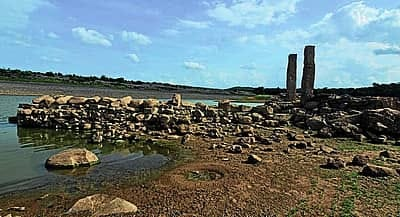
The rainfall shortage has severely affected the district's water resources. The Bhima and Krishna rivers have witnessed a significant decline in water levels, while several tanks and minor water bodies have dried up. The situation is in stark contrast to last year, when the district had received more than 28 percent excess rainfall by the end of September. Heavy water releases from reservoirs in Maharashtra had also caused the Bhima river to swell and trigger flooding. This year, however, the lack of rainfall has left farmers dependent on limited water stored behind barrages and other irrigation sources.
Farmers who sowed crops depending on the monsoon are facing heavy losses. He advised farmers in irrigated areas growing cotton to use potassium nitrate spray and cautioned that high temperatures could increase pod-borer infestation in pigeon pea. Farmers may opt for comparatively less water-intensive crops such as pearl millet and maize under drought conditions, he said, adding that groundnut cultivation after December could be considered.