Unseasonal flowering raises hopes of an early mango harvest
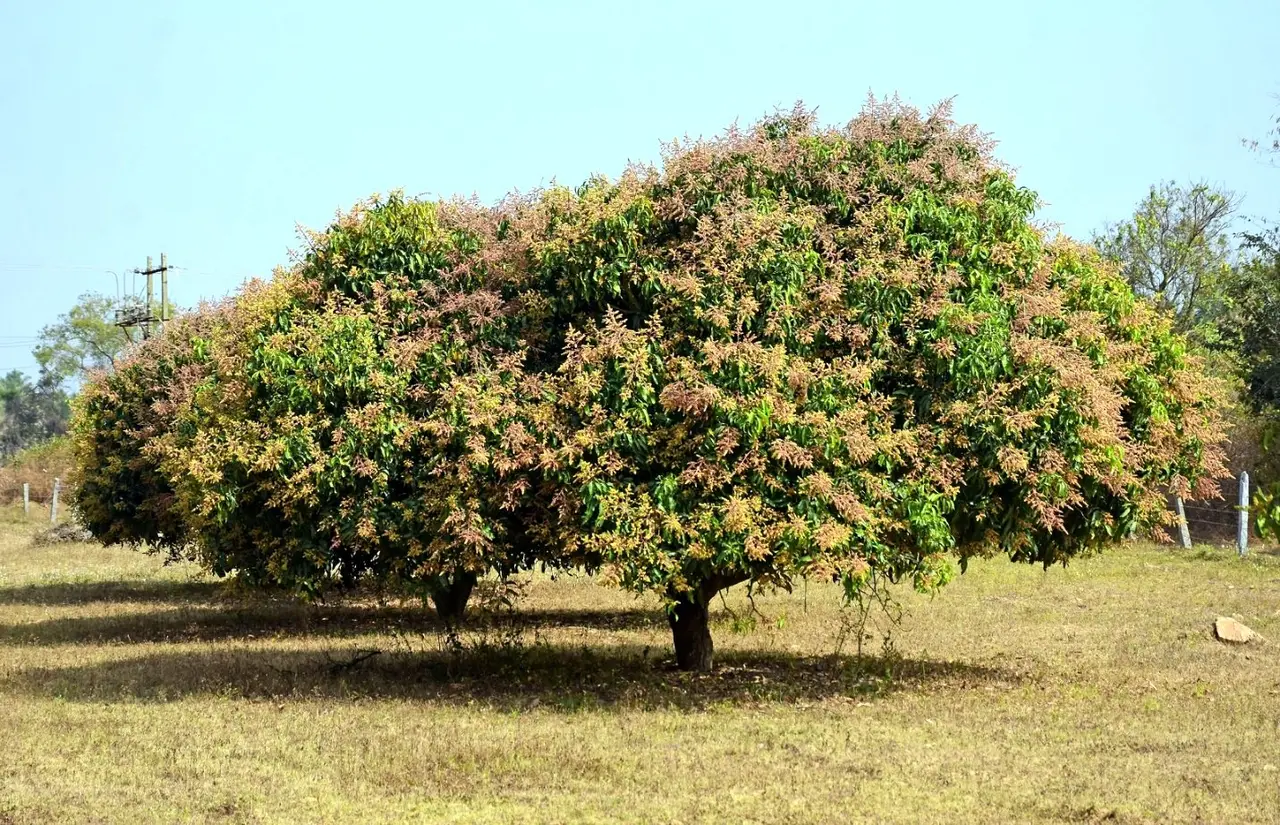
MYSURU: Usually associated with the arrival of spring, mango blossoms appear to have arrived ahead of schedule in Mysuru and surrounding areas, catching the attention of residents and nature lovers.
Mango trees, which are generally expected to burst into bloom during the winter months leading up to summer, are displaying floral clusters even as the region experiences November’s changing weather.
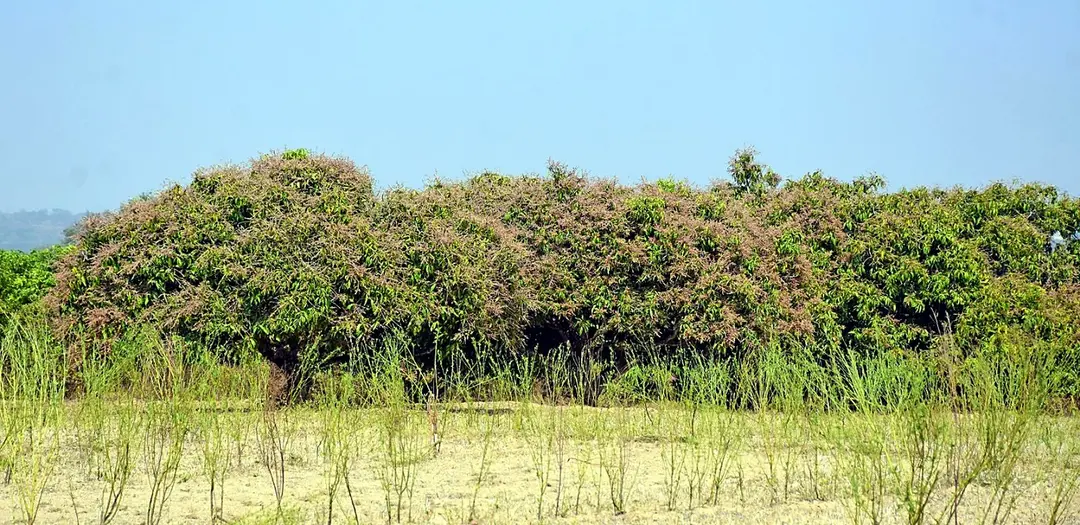
Early blossoms on a row of mango trees
The premature flowering has raised curiosity among farmers and horticulture enthusiasts. Is this a sign of an early mango season, or merely a temporary response of trees to changing climatic conditions?
While early flowering is not entirely unusual in mango-growing regions, its timing, intensity and spread across different locations determine whether it can be considered abnormal. Mango trees do not follow a rigid calendar. Their flowering is influenced by variety, age, previous crop load, soil moisture, temperature fluctuations and the physiological maturity of the shoots.
Scientific studies show that cool temperatures play a crucial role in triggering floral induction in mango. Mature leaves perceive the temperature changes and initiate physiological processes that encourage flower buds to develop. Research indicates that temperatures around 15–20°C during the day and 10–15°C at night can favour floral induction in several cultivars, although the response varies with variety and location.
Not the first time
This is not the first time Mysuru has witnessed such a phenomenon. In November-December 2016, drought-related stress triggered premature flowering in parts of Mysuru district, with some trees bearing fruits as early as January 2017, instead of the usual April-May period. Bengaluru too witnessed widespread early mango flowering in November-December 2019, attracting considerable attention. However, early flowering does not necessarily mean an early or bumper harvest. The survival of the blossoms and successful fruit setting depend on subsequent weather conditions.
The winter chill can be a double-edged sword. While moderate cool temperatures encourage flowering, excessively low temperatures during flowering can damage pollen viability, interfere with pollination and fertilisation, and reduce fruit setting. Research has found that temperatures below approximately 12°C during flowering can adversely affect pollination in some mango varieties. Very cold day-night conditions can also inhibit the growth of flower clusters.
Unseasonal rain, high humidity, fungal infections and strong winds can further cause flower drop and affect fruit development. Therefore, the blossoms currently visible across Mysuru and its neighbouring areas will need favourable weather, healthy pollination and adequate protection to develop into fruits.
For now, the early blossoms are a fascinating reminder of nature’s changing calendar. Whether they herald an early mango feast or turn out to be a false promise will depend on how the coming weeks unfold.