Rare Spotted Flycatcher recorded for first time in North Karnataka
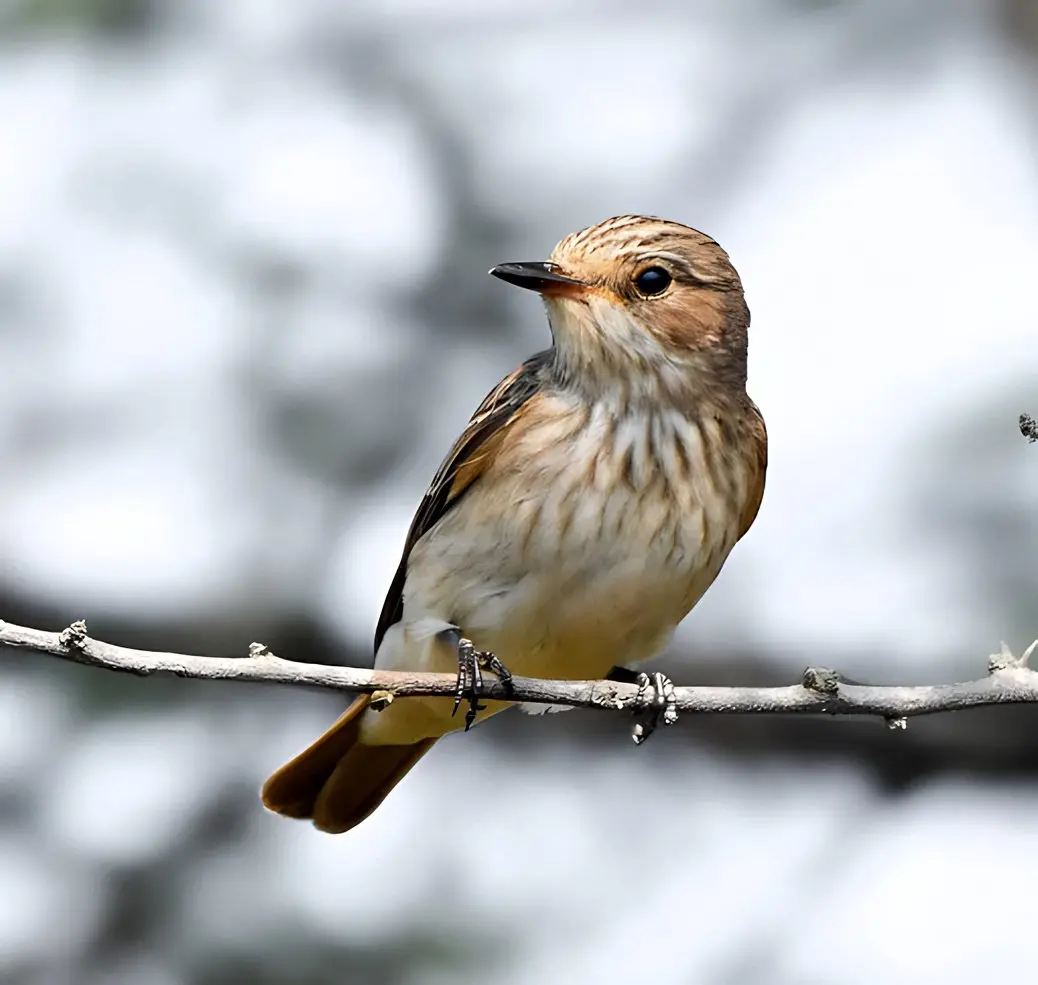
GADAG: Gadag district has recorded a rare migratory bird, the Spotted Flycatcher (Muscicapa striata), in the Nagavi-Beldhadi hill region. The sighting, reportedly the first documented record of the species in North Karnataka, has attracted the attention of birdwatchers and wildlife researchers.
Kiran Kammar, an ornithologist and wildlife researcher from Gadag, identified and recorded the bird on October 8. The species breeds in parts of Europe and Siberia and migrates to Africa during winter.
Recalling the sighting, Kammar said: “In early October, I was returning from birdwatching in the Nagavi-Beladhadi hills. Then, a small bird caught my attention, catching small insects on the ground and flying back to the branch of an acacia (jali) tree. When I carefully observed its upright sitting posture, the shape of its beak, and the stripes on its chest, I was certain that it was the extremely rare Spotted Flycatcher. It is a matter of pride that the scrub forests of our district provide shelter to such international migratory birds.”
A rare passage migrant
Unlike many migratory birds that spend several months in India, the Spotted Flycatcher is known as a passage migrant. It travels through northwestern and western India, particularly Gujarat and Rajasthan, on its journey towards Africa. During its return migration, it generally follows a route through the Arabian Peninsula, bypassing India. Its sighting in Gadag, away from its commonly recorded Indian migration areas, makes the observation noteworthy.
Small bird with distinct features
The Spotted Flycatcher measures around 14 to 15 centimetres and weighs approximately 14 to 20 grams. It has greyish-brown upperparts, a pale underside and fine streaks on its head and breast. Young birds have more noticeable spots.
The bird usually sits upright on an exposed branch, watches for flying insects and catches them in quick movements before returning to its perch.
Conservation status and habitat protection
The International Union for Conservation of Nature (IUCN) has classified the species as ‘Least Concern’. However, its global population trend is reported to be decreasing. Habitat loss remains an important conservation concern.
The sighting has also highlighted the ecological importance of Gadag’s hills and scrub forests. The district has recorded more than 250 bird species, with Magadi Lake and Kappatagudda among its important biodiversity areas.
Wildlife enthusiasts have stressed the need to protect natural habitats around Nagavi and Beldhadi by preventing illegal mining, encroachment and excessive pesticide use.
They have also called for further bird surveys to document migratory species and understand their movement patterns.