Preparations begin for 2028 Paryaya Mahotsava
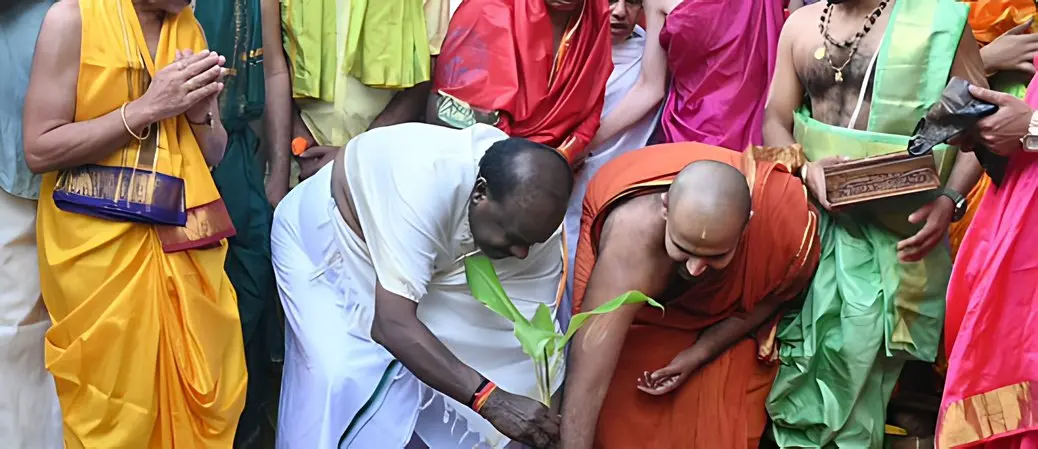
UDUPI: Preparations for the 2028 Paryaya Mahotsava of Sri Vishwavallabha Theertha Swamiji of Sode Math began with the traditional ‘Bale Muhurtha’ ceremony at the math premises on Sunday.
Sri Vishwavallabha Theertha Swamiji will ascend the Paryaya Peetha on January 18, 2028. As part of the preliminary preparations, the traditional ceremony was conducted with religious rituals and the planting of saplings.
The programme commenced at 6.30 am with special prayers at the Pattada Devaru Sannidhi of Sode Math and the shrines of Sri Chandreshwara, Sri Anantheshwara, Lord Krishna and Mukhyaprana.
At 7.45 am, banana, sugarcane and tulsi saplings were planted in the garden within the math premises. The Swamiji inaugurated the ceremony by planting a banana sapling.
Who was there
Union Minister for Heavy Industries and Public Enterprises H.D. Kumaraswamy, Dakshina Kannada MP Captain Brijesh Chowta, Udupi MLA Yashpal Suvarna, MLC Bhojegowda and former minister S.R. Mahesh were among those who participated.
The occasion also featured the ‘Kadali Vishwa Darshana’ programme, which showcased the diversity, significance and agricultural potential of banana cultivation and its value-added products.
Addressing the gathering, Kumaraswamy appreciated the traditions maintained by Udupi’s Ashta Maths, particularly the Paryaya system, observed once every two years. He highlighted how ancient customs continue to be preserved with devotion and discipline across the coastal districts.
Admitting that he was previously unaware of the significance of Bale Muhurtha, Kumaraswamy said the Swamiji had explained the scientific reasoning behind traditional preparations, including planting banana saplings and storing essential supplies such as rice, firewood and paddy.
He also praised the exhibition showcasing around 300 to 400 banana varieties and value-added products, describing the experience as an opportunity to understand agriculture more broadly.