‘Love your mother tongue to preserve your identity’
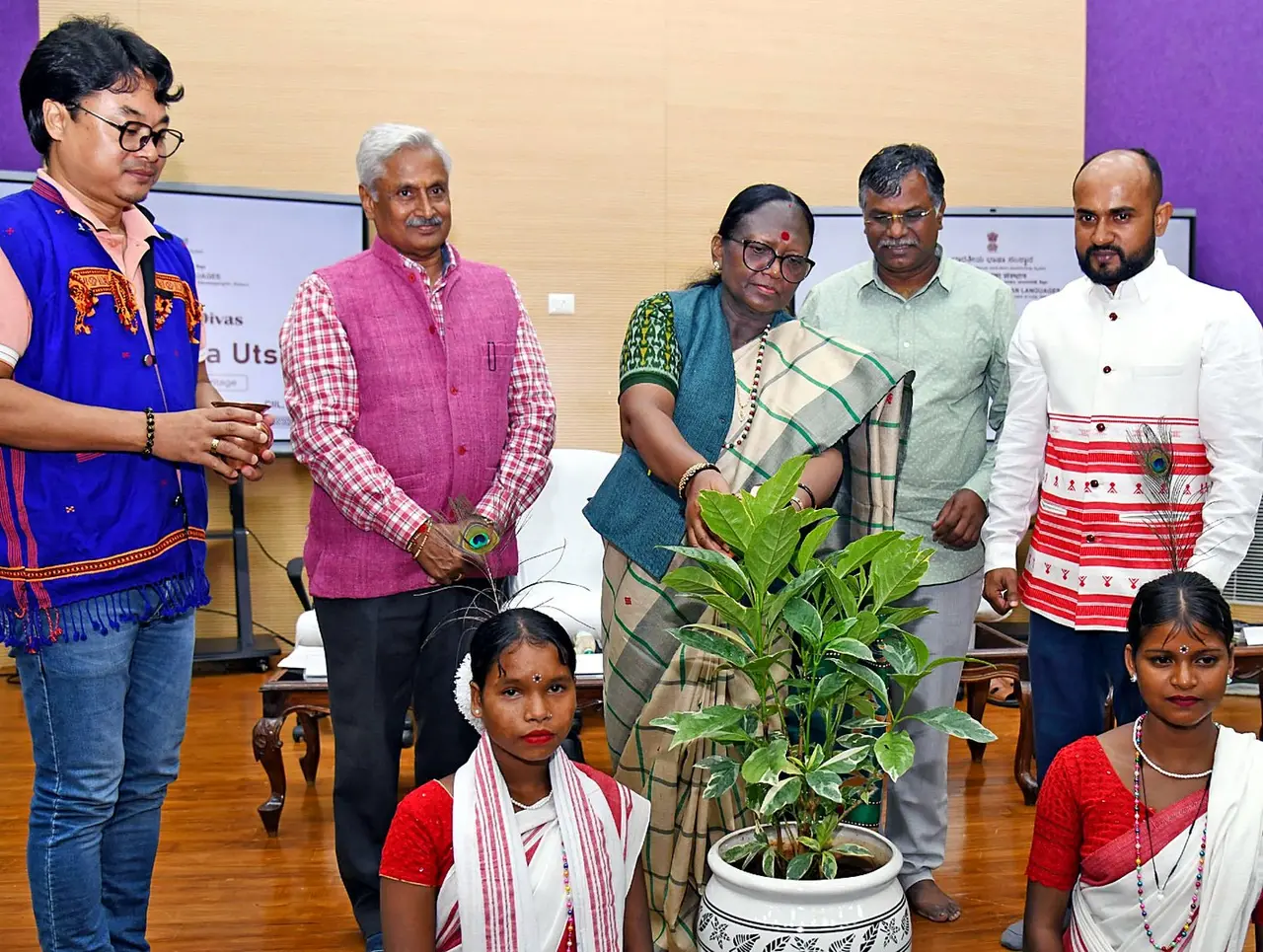
MYSURU: Tribal languages can be properly documented, preserved and researched only when people make an effort to learn, understand and appreciate them, opined Padma Shri awardee Dr. Damayanti Beshra, eminent Santhali writer, poet and linguist.
Addressing the Tribal Language Festival organised on the occasion of Janjatiya Gaurav Divas at Central Institute of Indian Languages (CIIL) here on Wednesday, she called upon researchers, linguists and language enthusiasts to understand tribal communities through their languages to ensure authentic research and documentation. She paid homage to Bhagwan Birsa Munda, popularly revered as Dharti Aaba, whose contribution to the tribal community was being commemorated through Janjatiya Gaurav Divas.
Had it not been for Birsa Munda, she said, the tribal communities of India might not have gathered at an institution like the CIIL today.
Expressing happiness at being part of the festival, she said she belonged to the Santhali community of Odisha, a State inhabited by 64 different tribal communities. Describing India as a country of languages, she said language was the soul of a community. It did not merely reside in the physical existence of people but lived through their speech, through which they communicated, recognised and understood one another. Just as the soul seeks union with the Supreme Being through spiritual practices such as meditation, yoga and other disciplines, the soul of a community could also be nurtured through its mother tongue. The traditions, songs, stories, customs, practices, festivals and cultural expressions of a community were preserved through its language. Therefore, people must practise and nurture their mother tongues to keep them alive, she added.
She said Hindi was not her mother tongue, and she felt that she might not be able to express herself as effectively as she could in her native language, Odia, or her mother tongue, Santhali.
Welcoming the initiative to organise the Tribal Language Festival, she urged participants to make conscious efforts to learn and understand tribal languages. “Only then can proper documentation and preservation of tribal languages be achieved. It will also help researchers obtain more information and undertake authentic research,” she said.
Emphasising the importance of mother tongues, Dr. Beshra recited a few lines of poetry in Santhali to explain the emotional bond between a community and its language. “It is through our mother tongue that we understand this earth and everything that exists on it. Therefore, if you want your community to grow and preserve its identity, you must love your language and respect its script. Only then can you establish and sustain your identity,” she said.
Citing her own life as an example, she said she had been working for the promotion of the Santhali language and had been writing in it since 1974‑75, long before it was included in the Eighth Schedule of the Indian Constitution on December 22, 2003. “It is because I have continued writing and working in my mother tongue that I have been invited here and honoured. We can achieve recognition and establish our identity only by serving and promoting our mother tongue,” she said.