Kanakadasa’s ideals relevant even today: UoM VC
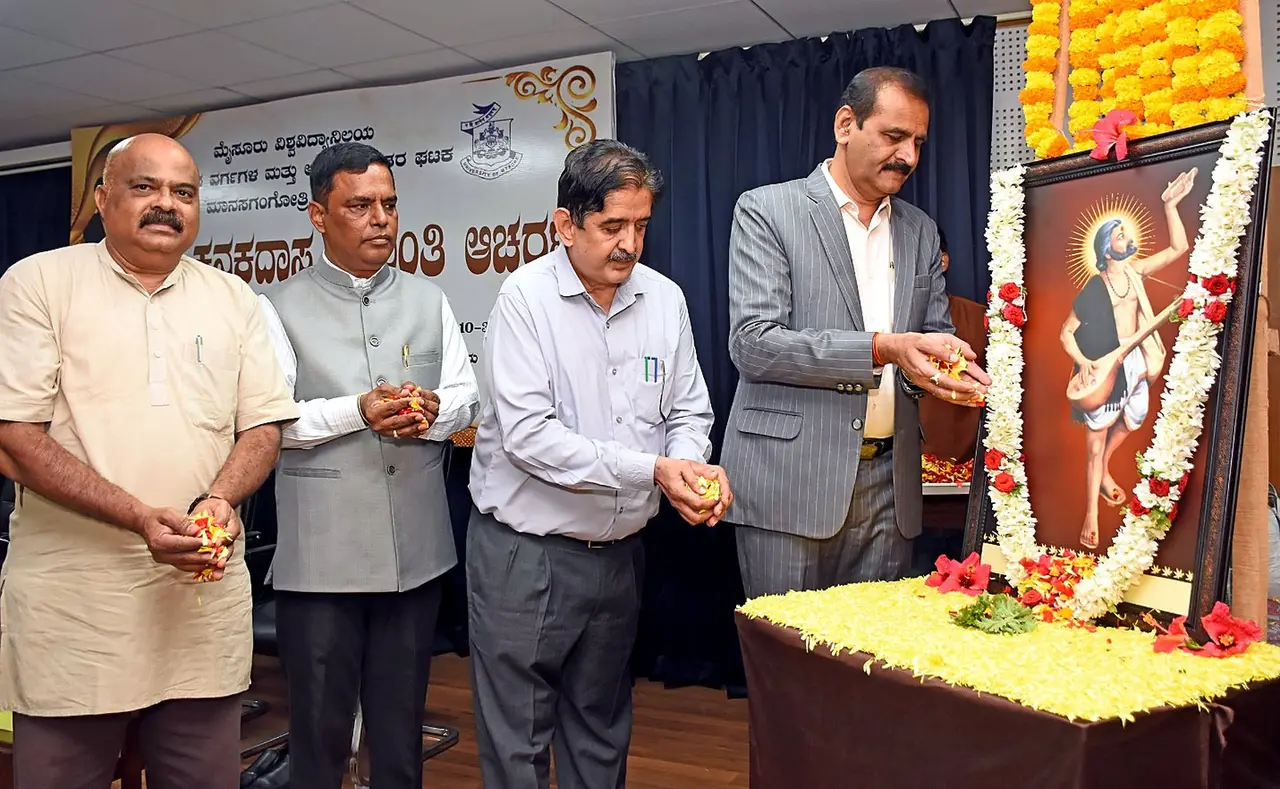
MYSURU: The teachings of saint-poet and social reformer Kanakadasa on equality, social justice, fraternity and humanity remain highly relevant in contemporary society, said University of Mysore Vice-Chancellor Prof. N.K. Lokanath.
Addressing the Sri Kanakadasa Jayanti celebrations organised by the University of Mysore in Mysuru on Friday, he said remembering a great saint, poet, philosopher and social reformer like Kanakadasa should not be limited to celebrating his birth anniversary. Instead, it should inspire people to adopt his ideals in their everyday lives.
Describing Kanakadasa as a symbol of devotion, knowledge and social equality, the VC said he occupied a unique position in Karnataka’s devotional and literary traditions. Despite significant advances in science, technology, education and economic development, society continued to face challenges such as poverty, unemployment, caste discrimination, gender inequality and disparities in educational opportunities. Development should not be measured merely by an increase in national income. True development lies in ensuring education, healthcare, employment, dignity and equal opportunities for the poorest sections of society. Inclusive growth is possible only when the benefits of economic progress reach every section equally, he observed.
Highlighting the role of educational institutions, Prof. Lokanath said universities should not remain confined to awarding degrees but must serve as centres of knowledge creation, research, social transformation and promotion of human values.
Referring to the famous episode of Kanaka’s Kindi at the Sri Krishna Temple in Udupi, he said it had become an eternal symbol of devotion, equality and humanity transcending social barriers. The episode conveyed that discrimination in the name of caste, religion or spirituality had no place in society and that true religion should unite people rather than divide them.
He also highlighted the social significance of Kanakadasa’s literary contributions, including Haribhaktisara, Nalacharitre, Mohanatarangini and Ramadhanya Charitre.
In particular, Ramadhanya Charitre, through the symbolic debate between rice and ragi, questioned notions of superiority and inferiority prevailing in society and challenged the criteria used to determine a person’s social status.
Stressing that a person’s greatness should be judged by character, knowledge and conduct rather than birth, caste, wealth or social status, Prof. Lokanath called upon people to work towards building a society founded on equality, social justice and humanity. “Conduct is greater than birth, humanity is greater than devotion, and the welfare of society is more important than individual interests,” he said, summing up the essence of Kanakadasa’s philosophy.