Gadag faces severe fodder shortage, farmers struggle
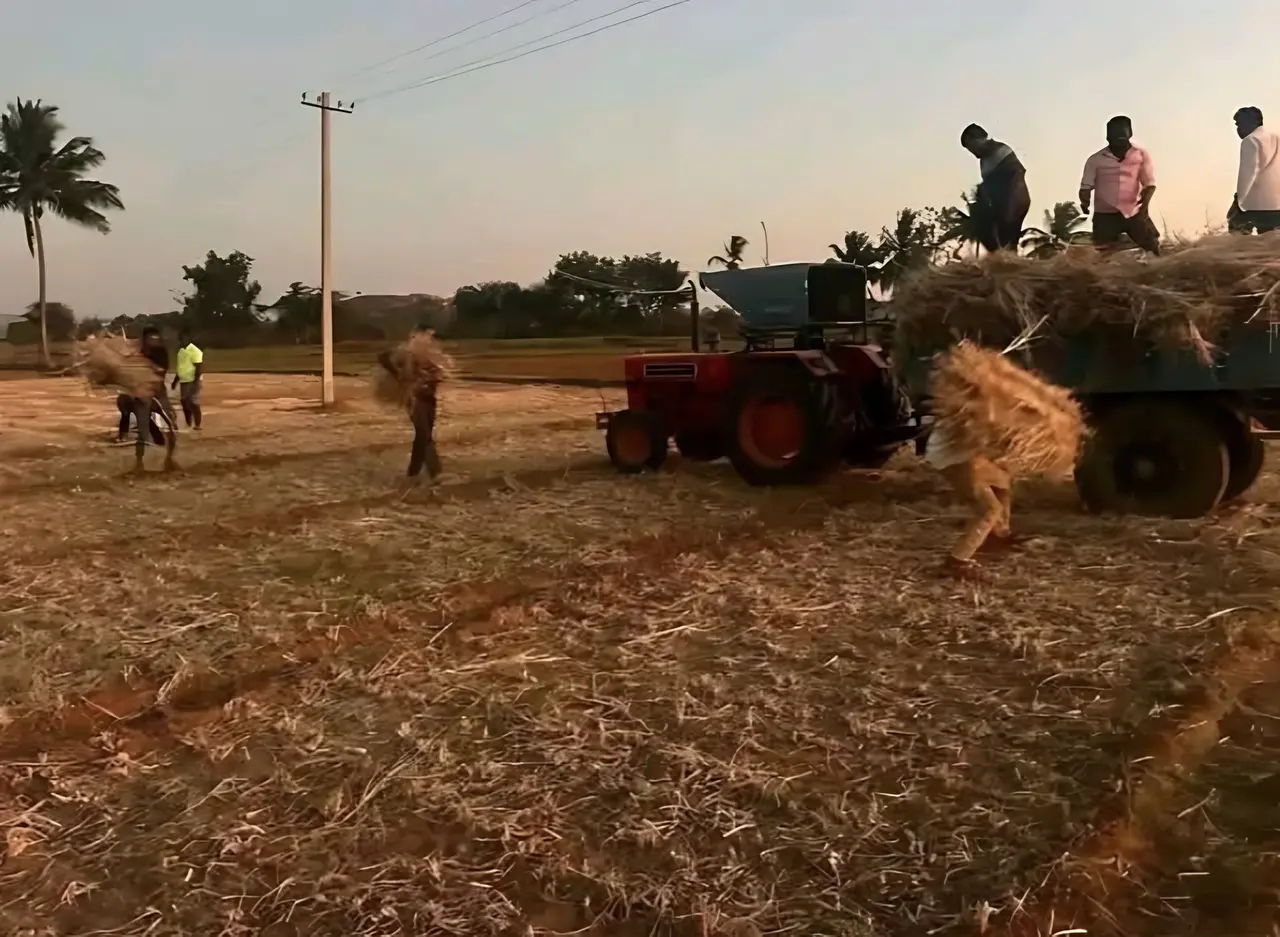
GADAG: Farmers across Gadag district are facing a severe fodder shortage following the failure of monsoon and post-monsoon rains. With major crops drying up, livestock owners are struggling to find fodder even at high prices.
Groundnut, jowar, maize, chickpea and wheat crops have suffered due to poor rainfall, leaving farmers with very little fodder. The shortage has affected Gadag, Lakshmeshwar, Gajendragad, Shirahatti, Mundargi, Ron and Nargund taluks, where farmers are collecting whatever fodder remains in their fields.
Fodder prices have increased sharply. A tractor load of groundnut fodder is reportedly selling for ₹40,000 to ₹50,000, while jowar fodder costs between ₹20,000 and ₹25,000. Despite paying these high prices, farmers are finding it difficult to obtain good-quality fodder.
Farmers bring fodder from distant districts
With local supplies running short, farmers are purchasing paddy straw from Shivamogga, Haveri and the Malnad regions of Uttara Kannada. A load of paddy straw reportedly costs between ₹10,000 and ₹15,000. Transportation expenses add to the financial burden, particularly for small and marginal farmers.
The falling prices of cattle have further worsened their difficulties. Unable to afford the rising cost of fodder, some farmers are selling their livestock at low prices.
The shortage has also affected the dairy industry. Milk production has reportedly declined because cattle are not getting enough nutritious green fodder. This has reduced the income of rural families who depend on dairy farming for additional earnings and made it increasingly difficult for them to maintain their livestock.
Farmers said the failure of both monsoon and post-monsoon crops had pushed the district into a serious fodder crisis. Small farmers cannot afford to transport paddy straw from distant areas at such high prices. They are now turning to grass available in nearby hills to feed their cattle.
Farmers have urged the government to open cattle shelters (Goshalas) in the affected areas and arrange an adequate supply of fodder at affordable prices. They have also sought immediate assistance to protect livestock and support families dependent on dairy farming.