Farmers protest, block highway in Hunagund
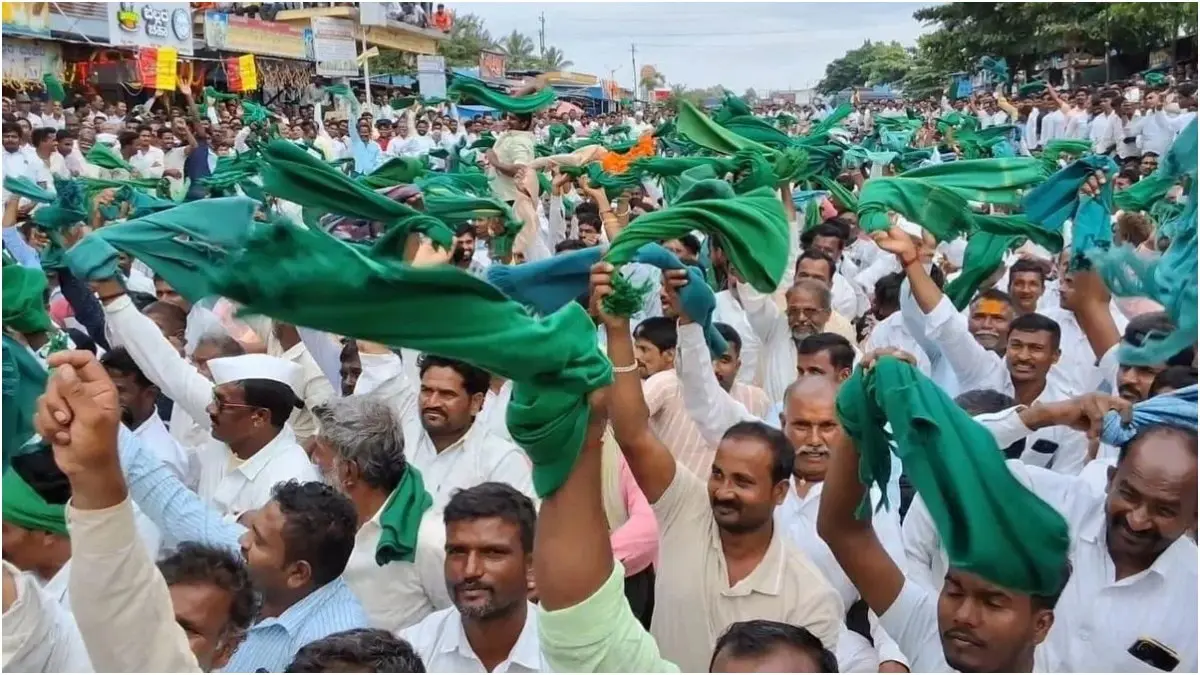
BAGALKOT Agrarian unrest sweeping across northern Karnataka escalated dramatically as sugarcane growers in Hunagund, Bagalkote district, launched a massive demonstration, blocking the vital Raichur-Solapur National Highway and bringing commercial transit to a grinding halt. The high-stakes blockade was triggered by the swift collapse of crucial discussions in New Delhi. Union Agriculture Minister Shivraj Singh Chouhan and Union Minister for Food and Consumer Affairs Pralhad Joshi convened a high-level meeting with prominent farmer representatives to address mounting grievances over agricultural pricing and mill regulations. However, negotiations broke down without a final resolution, prompting frustrated cultivators to immediately take to the streets across multiple districts. The blockade at Hunagund has caused severe disruptions along the economic corridor, leaving hundreds of commercial trucks, passenger buses, and personal vehicles trapped in serpentine queues stretching for kilometers. Commuters have faced immense inconvenience as local transit paralyzed traffic flows. Protesting growers are vociferously demanding immediate administrative action on critical, long-pending issues, most notably the fixation of a fair and remunerative price for sugarcane crops, the strict enforcement of standard recovery rates, and the urgent clearance of outstanding financial dues owed by regional sugar mills. Demonstrators expressed deep disillusionment with federal and state authorities, arguing that ongoing delays and broken promises continue to threaten their financial survival. While central leaders recently proposed forming a specialized high-level joint committee to investigate weighing discrepancies and recovery calculations, local farming unions argue that immediate, concrete pricing reforms are needed rather than prolonged bureaucratic reviews. Local law enforcement agencies and district administrative officials rushed to the scene to manage the tense situation, deploying additional security personnel to maintain public order and divert stranded motorists onto alternative routes. As protest leaders vow to maintain their positions until concrete guarantees are met, the pressure mounts on both state and central administrations to find a swift and equitable solution to the deepening agricultural crisis.