Drought hits Magadi Lake, reducing migratory bird numbers
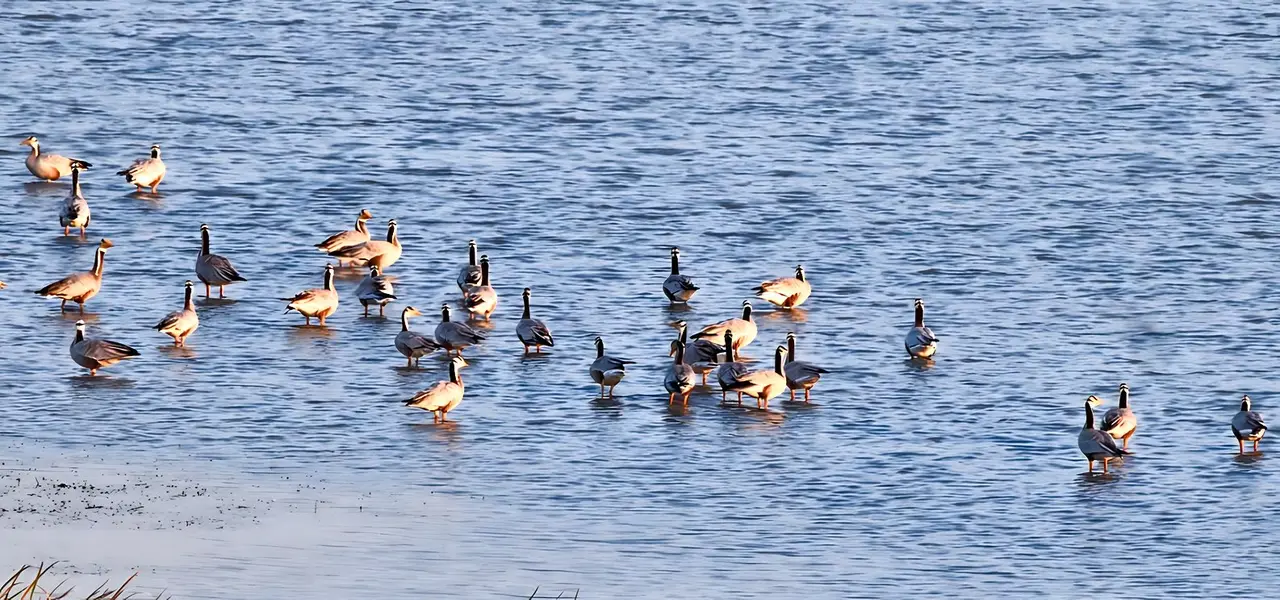
GADAG: Magadi Lake in Shirahatti taluk, Gadag district, is witnessing a decline in migratory bird numbers this winter as drought and falling water levels affect the wetland. Bar-headed geese, which travel thousands of kilometres from Central Asia and Mongolia to escape the harsh winter, are among the birds affected.
The lake, spread across nearly 134 acres, is an important wintering ground for these migratory birds. However, poor rainfall during the 2026 monsoon season has reduced the water supply to the lake, leaving only limited water in parts of the wetland. The weak monsoon and drought conditions have affected several parts of North Karnataka.
Bird numbers witness a sharp decline
According to local sources, Magadi Lake and neighbouring Shettikeri Lake previously attracted around 12,000 to 13,000 bar-headed geese. This year, their number has reportedly fallen to around 2,500. Birdwatchers fear that the remaining birds may also leave if water levels continue to fall.
The decline in water availability and food resources is affecting the habitat of these migratory visitors. Poor crop growth in surrounding agricultural fields has also reduced the availability of food.
Impact on tourism and biodiversity
Magadi Lake attracts birdwatchers, wildlife photographers, students and tourists from Karnataka and neighbouring states. The decline in bird numbers has disappointed visitors who travel long distances to witness the seasonal migration.
The wetland also supports local biodiversity and agriculture. Migratory birds feed on insects and leftover grains in nearby fields, contributing to the local ecological cycle. Reduced water availability and changes in agricultural activity could further affect this habitat.
Residents seek permanent water supply
Magadi Lake is recognised as a Ramsar wetland and an Important Bird Area (IBA). Residents and environmentalists have urged the government and elected representatives to take steps to ensure a regular water supply to the lake through the Tungabhadra River or nearby irrigation canals.
They have called for a long-term conservation plan to protect the wetland, support migratory birds and preserve its ecological importance.