Drought devastates flower farmers, yields fall 90%
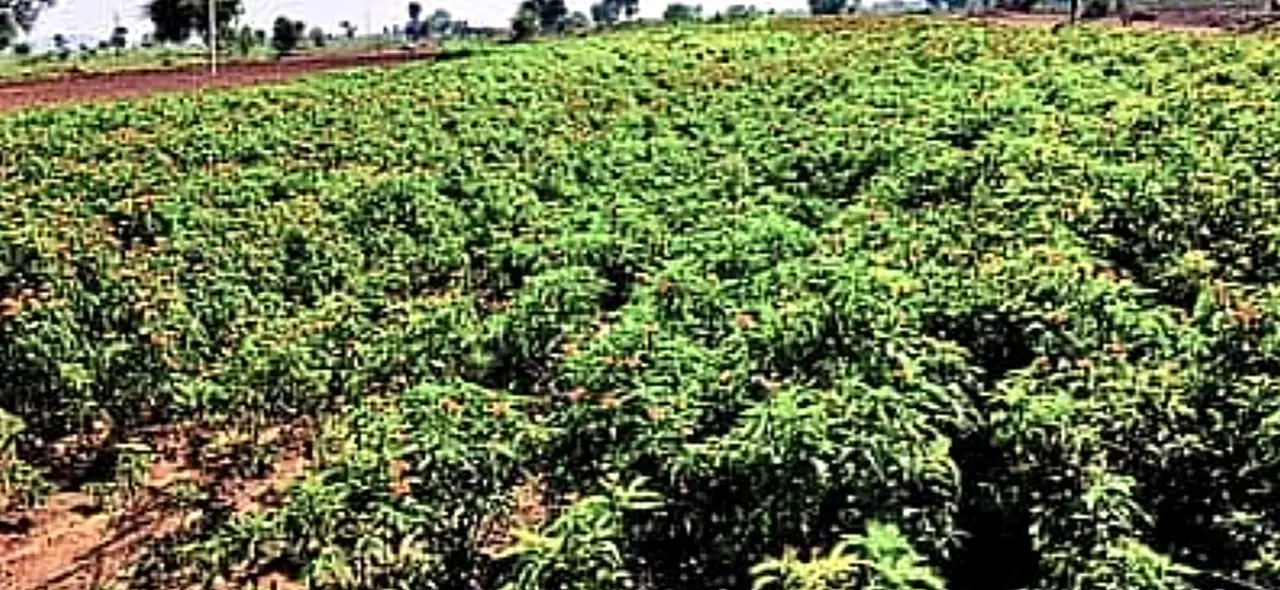
RAICHUR: Flower growers in Nelakol village of Maski taluk are facing severe financial losses as drought and declining groundwater levels have reduced flower production by nearly 90 per cent, despite strong market demand and attractive prices.
Farmers who depend entirely on flower cultivation for their livelihood are struggling to protect their crops due to poor rainfall and falling borewell water levels. Several families in the village are now facing mounting financial difficulties as their main source of income has been hit.
Crops such as Crossandra (Kanakambara), button jasmine, Jaji jasmine and Kakada flowers are drying up because of inadequate soil moisture and insufficient irrigation water. Farmers said their daily harvest, which stood at around 8 to 10 kg last year, has dropped to just 1 to 2 kg this year.
A farmer cultivating flowers on 10 guntas of land said he had been in the profession for 15 years. Anticipating water scarcity after poor monsoon rainfall, he avoided growing chrysanthemum and opted for button jasmine and Kakada, believing they required less water.
However, even these crops have suffered due to the severe shortage. He said he had spent ₹60,000 to drill a new borewell in an attempt to save the standing crops, but the effort failed to provide the expected water.
Farmers Mohammed Zafar, Basappa, Huchappa and Shivappa said some growers had drilled four to five borewells on their agricultural land, but had failed to find sufficient water. The investment has resulted in losses running into lakhs of rupees.
According to the farmers, 10 to 12 flower growers in Nelakol collectively harvested around one quintal of flowers every day last year. This year, the combined daily output has fallen to just 8 to 10 kg.
Farmers said the steep decline in production had turned flower cultivation into a financial burden, even as market demand remained strong. They are now struggling to recover their investments and sustain their families.