BCCC drives temple cleanliness campaign
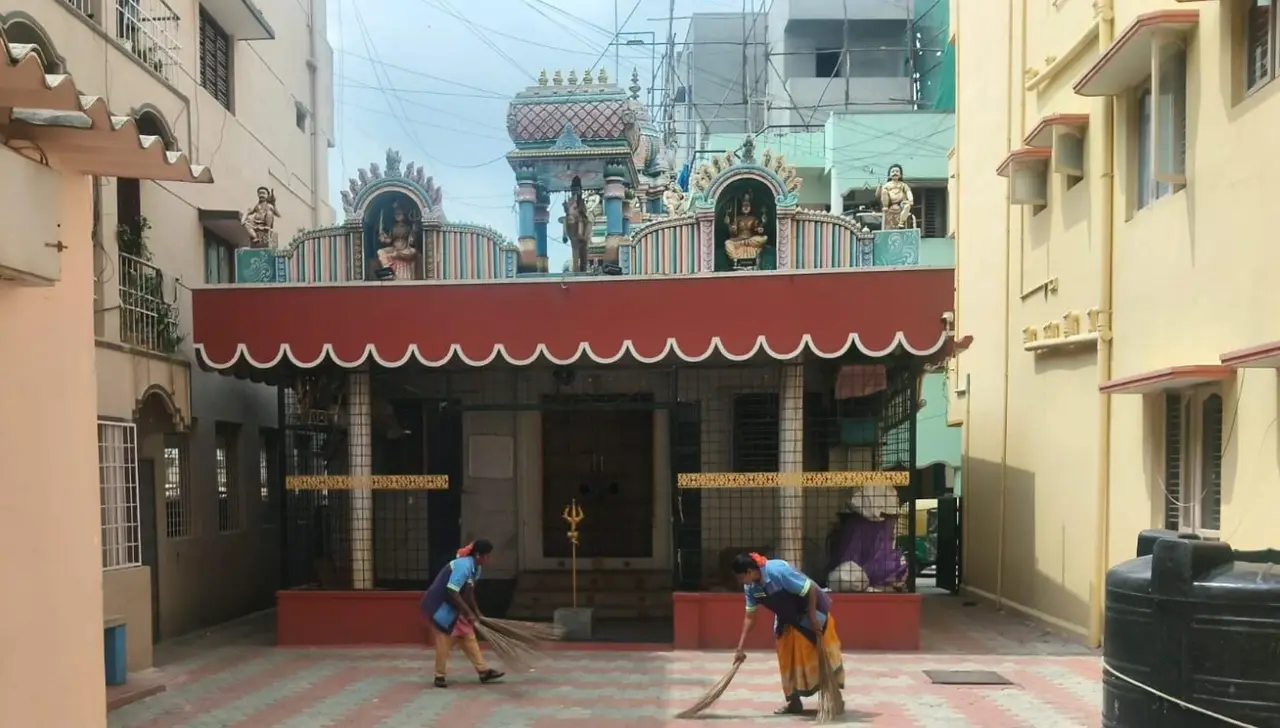
BENGALURU Stepping up municipal sanitation efforts and aggressively pushing to elevate the metropolis's standing in national Swachh Survekshan rankings, the Bengaluru Central City Corporation has successfully concluded the fourth phase of its intensive special cleanliness drive, targeting major religious sites and surrounding thoroughfares across its five core administrative zones. Spearheaded by Corporation Commissioner Jagadeesh G., the targeted hygiene initiative reflects a strategic focus on public gathering spaces where large footfalls of devotees congregate. Commissioner Jagadeesh emphasized that maintaining pristine sanitation standards around sacred institutions represents a collective civic responsibility, ensuring that visitors experience a clean, orderly, and spiritually uplifting environment. Under a meticulously structured action plan, specialized sanitation squads were deployed across twenty-two prominent temples situated within the Shantinagar, C.V. Raman Nagar, Shivajinagar, Chamarajpet, and Chickpet municipal divisions. The division-wise deployment covered six temples in Shantinagar, four in C.V. Raman Nagar, five in Shivajinagar, six in Chamarajpet, and one in the historic commercial hub of Chickpet. The massive civic operation mobilized a dedicated workforce of 172 pourakarmikas alongside 56 supervisory sanitation officers. Working through early morning hours, teams systematically scrubbed pedestrian pathways, cleared overgrown weeds, washed paved courtyards, and eliminated legacy garbage accumulation points surrounding the temple complexes. A cumulative total of approximately 344 kg of solid waste was retrieved from the perimeter zones during the drive. In strict adherence to municipal waste-processing guidelines, sanitation crews meticulously segregated the collected debris at source. Discarded ritual offerings, ceremonial flowers, and organic food remnants were separated as wet waste, while single-use plastics, discarded paper materials, water bottles, and dry foliage were categorized as dry waste. The segregated materials were subsequently loaded onto dedicated municipal transport vehicles and dispatched to authorized processing facilities for scientific disposal and composting. Municipal leadership confirmed that similar specialized sanitation drives will be conducted on a regular schedule across other public and religious venues in the coming weeks to sustain hygiene benchmarks ahead of upcoming national urban cleanliness evaluations.