Siddaramaiah calls for equality through sorghum story
Comparing the work to Kanakadasa’s Ramadhanya Charite, Siddaramaiah praised Badawadagi for honouring jola, the vital staple of working-class families
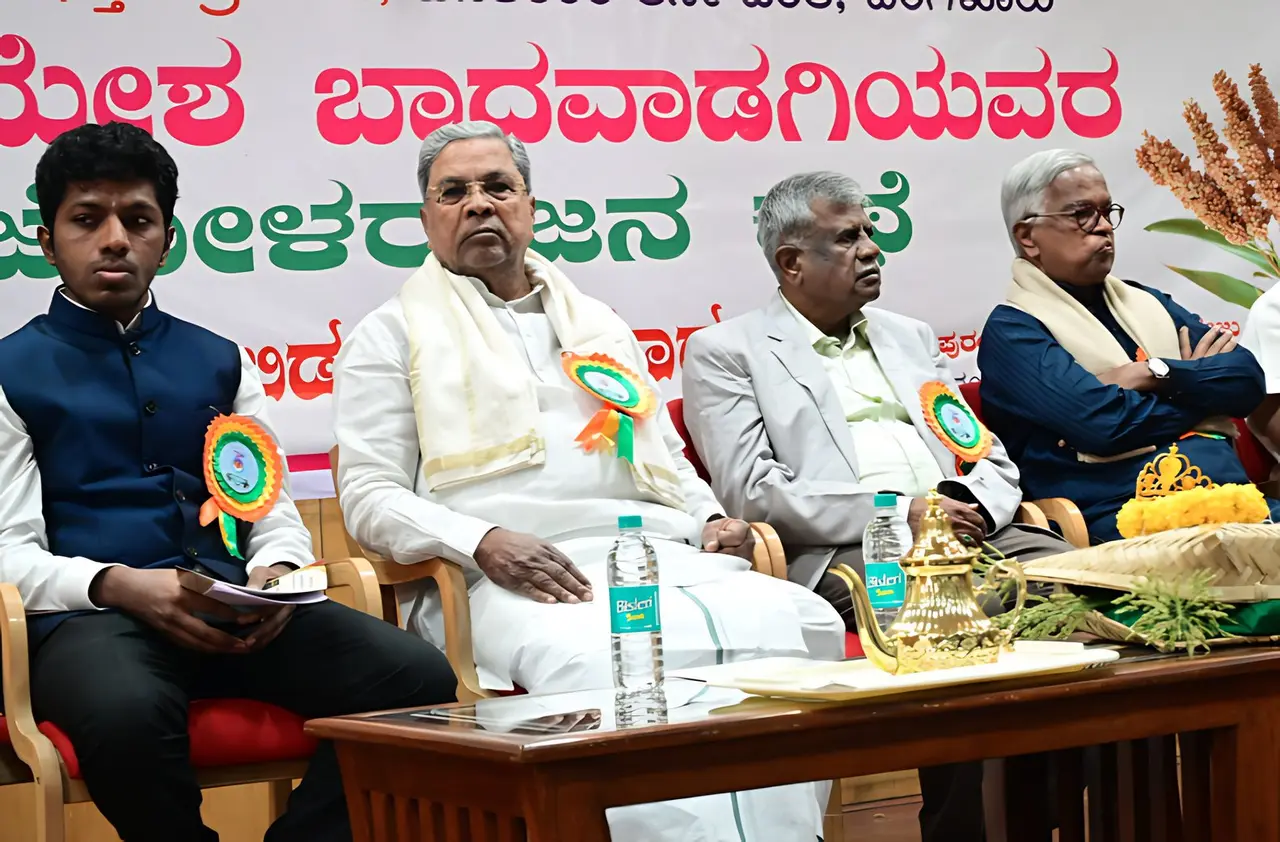
BENGALURU: Former Karnataka Chief Minister Siddaramaiah has praised author Sangamesha Badawadagi for highlighting social and regional inequalities through his book Jolarajana Kathe (The Story of the Sorghum King). He said literature plays an important role in creating an equal society.
Speaking at the book release in Bengaluru, Siddaramaiah compared the work with poet Kanakadasa’s Ramadhanya Charite. While Kanakadasa highlighted the importance of ragi, Badawadagi has brought attention to jola (sorghum), a staple food of poor and working-class families.
Sharing his childhood memories, Siddaramaiah recalled that ragi and jola were everyday foods in poor households, while rice was mainly prepared during festivals and special occasions. He said these experiences influenced his decision to introduce the Anna Bhagya scheme during his tenure as Chief Minister to improve food security among poor families.
He also highlighted the historical backwardness of the Kalyana Karnataka region and stressed the importance of Article 371(J) in providing better opportunities in education, employment and development. He said the constitutional provision had helped young people from the region pursue careers in medicine, engineering and teaching.
Siddaramaiah also expressed concern over recurring droughts and their impact on farmers and rural families. He urged governments to provide timely assistance to people facing water shortages and agricultural losses.
Speaking about social inequality, he recalled the teachings of Basavanna, Dr B.R. Ambedkar and Mahatma Gandhi, who advocated equality and a society free from caste discrimination. He said casteism and superstitions continued to exist even among educated people and called for scientific thinking and rational attitudes.
Congratulating Badawadagi, Siddaramaiah said the book highlighted the food culture, lives and struggles of people in Kalyana Karnataka. He called for a prosperous Karnataka where social and regional inequalities are removed and everyone enjoys equal opportunities.