Quality healthcare must reach remote areas: Murmu
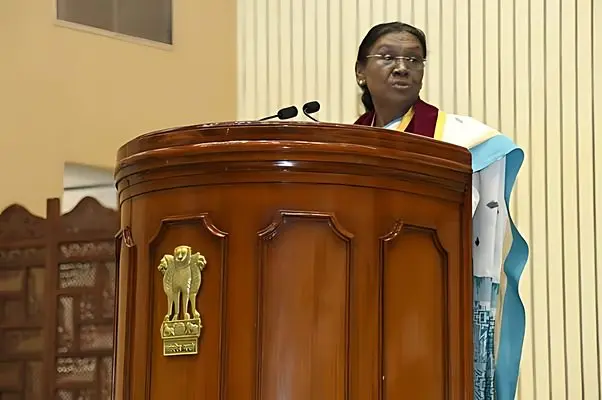
NEW DELHI: President Droupadi Murmu on Friday urged young medical professionals to work towards making quality healthcare accessible to all sections of society, particularly people living in remote and underserved areas, while addressing the 12th Convocation Ceremony of the Atal Bihari Vajpayee Institute of Medical Sciences (ABVIMS) and Dr. Ram Manohar Lohia Hospital in the national capital.
The convocation ceremony, held at Vigyan Bhawan, was attended by Union Health and Family Welfare Minister J.P. Nadda and marked an important milestone for graduating medical students.
Congratulating the graduates, the President lauded the significant representation of women among the outgoing batch and said their achievements reflected the growing participation of women in medical education and the healthcare sector.
She also highlighted the role of Dr. Ram Manohar Lohia Hospital in providing extensive clinical exposure to students, noting that more than 19 lakh patients availed outpatient services at the hospital in 2025, enabling students to gain practical experience and strengthen their clinical skills.
Reflecting on the progress made in the healthcare sector over the past decade, Murmu said sustained government initiatives had strengthened the delivery of healthcare from primary care to tertiary services.
She said around 1.75 lakh Ayushman Arogya Mandirs are operational across the country, expanding access to primary healthcare.
The President also highlighted efforts to expand advanced healthcare and medical education beyond metropolitan cities into Tier-2 and Tier-3 centres, helping people access specialised treatment closer to their homes.
The President also underlined the importance of financial protection in healthcare, highlighting the contribution of the Ayushman Bharat Pradhan Mantri Jan Arogya Yojana, which provides health coverage of up to Rs 5 lakh per family annually.
She said the scheme has helped reduce the burden of hospitalisation expenses and improved access to quality healthcare for economically weaker sections. On healthcare innovation, Murmu stressed the need to integrate traditional systems of medicine with modern medical practices.