C.T. Ravi questions Congress fear over SIR
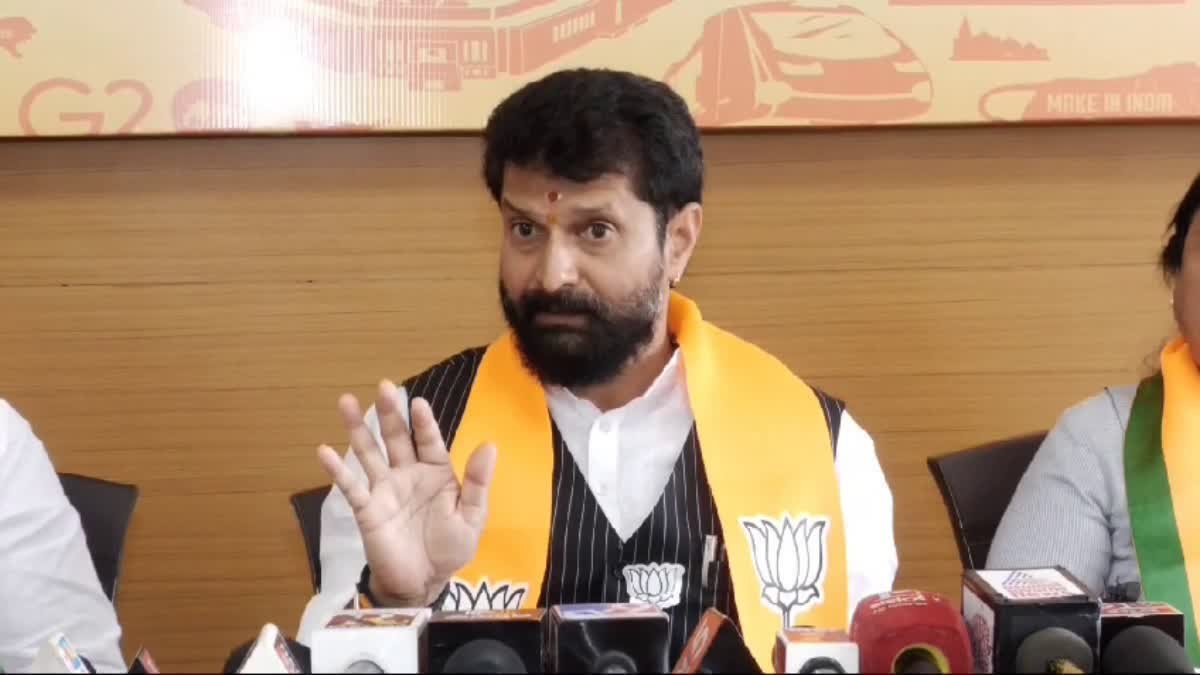
CH NEWS, BENGALURU Senior Bharatiya Janata Party (BJP) leader and Legislative Council member C.T. Ravi launched a scathing attack on the ruling Congress administration, questioning why the party is violently opposing the constitutional Special Summary Revision (SIR) of electoral rolls. Speaking to reporters in Bengaluru, Ravi alleged that the Congress's vehement opposition stems from a deep-seated fear that thorough voter verification will expose and purge thousands of illegal Bangladeshi immigrants from the voter lists. The controversy erupts amid heightened political friction over electoral roll integrity, with the ruling Congress party staging demonstrations against alleged voter deletion tactics. Dismissing these protests as political theatrics, Ravi emphasized that the nationwide SIR framework is an established administrative protocol that has been successfully executed twelve times across the country, predating the current central government. "Why is the Congress apprehensive about the comprehensive revision of the voters' list? Is the party worried that Bangladeshi voters might be removed from the rolls if complaints are properly verified?" Ravi asked, challenging the state leadership to account for the demographic shifts observed in urban and rural pockets alike. Ravi leveled serious national security allegations, asserting that hundreds of undocumented foreign nationals—specifically referencing illegal immigrants from Bangladesh—have infiltrated municipal workspaces in Bengaluru as well as agrarian employment sectors, including coffee plantations across Chikkamagaluru and Kodagu districts. He argued that these individuals are unlawfully occupying jobs meant for Indian citizens while simultaneously subverting the democratic process by embedding themselves within electoral rolls. The BJP legislator heavily criticized the state government for failing to constitute a Special Investigation Team (SIT) or pursue rigorous administrative audits, despite widespread revelations regarding illegal workforce entries. He contended that the Chief Minister’s high-profile street protests against the Election Commission are calculated diversions designed to pull public attention away from escalating governance challenges, agrarian distress, and separate political controversies. Addressing criticisms directed at central oversight, Ravi clarified that voter registration and electoral roll management are executed primarily by state government personnel drawn from local revenue, education, and municipal departments. "Agencies like the Enforcement Directorate and the CBI do not handle voter registration; state government employees execute 99% of the work. The state government itself bears responsibility for any irregularities," he stated. Defending the integrity of legal procedural tools, Ravi noted that statutory mechanisms like Form 6 ensure seamless inclusion for any legitimate citizen submitting proper documentation, while Form 7 allows for lawful objections against suspicious or duplicate entries. He asserted that Booth Level Officers (BLOs) and Booth Level Agents (BLAs) operate within strict regulatory limits, and that no name is removed arbitrarily without thorough, independent field verification by state election personnel.