Most Muslims are former Dalits: Rizwan Arshad
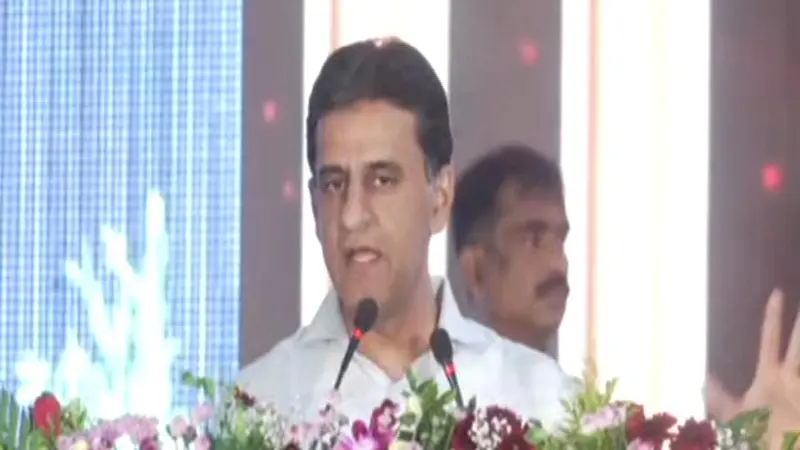
CH NEWS, BENGALURU Karnataka Minister for Food, Civil Supplies, and Consumer Affairs Rizwan Arshad has sparked significant political discourse by asserting that the vast majority of Muslims in contemporary society trace their lineage directly to former Scheduled Caste (SC) and Scheduled Tribe (ST) communities. Speaking at a state-level Valmiki Jayanti celebration hosted at the Vidhana Soudha Banquet Hall, the minister emphasized the profound socio-historical ties connecting marginalized Dalit populations and minority communities. Highlighting the shared spatial realities of marginalized neighborhoods, In a profound socio-political assertion that has ignited widespread public discussion across Karnataka, Minister for Food, Civil Supplies, and Consumer Affairs Rizwan Arshad declared that the Muslim community and Scheduled Castes (SC) and Scheduled Tribes (ST) share deep historical and ancestral bonds, going as far as describing modern Muslims as "former Dalits." Arshad noted that traditional Dalit settlements (Dalit keris) and Muslim localities have historically co-existed within the same socio-economic environments. He argued that historical conversions rooted in ancestral struggles did not alter the fundamental identity of individuals or the blood running through their veins, leading him to characterize the community's demographic makeup by stating that "in a sense, one could assert that all Muslims are 'former Dalits'." Arshad highlighted the intrinsic sociological intersections linking marginalized communities. He pointed out that geographically and socially, Dalit settlements. The minister further drew attention to the common systemic hardships and Muslim neighborhoods have historically coexisted within the same immediate socioeconomic environments, sharing identical living conditions, struggles, and systemic challenges. Economic deprivation, and societal challenges faced uniformly by Dalits, backward classes, and minorities. Concluding his address with a passionate appeal, Arshad called upon revered spiritual leaders and Swamijis of the Dalit community to extend their solidarity, stand in mutual support, and become a collective voice for the struggles confronting marginalized minorities across the state.