Forest dept struggles to save roadside saplings in Hulasur
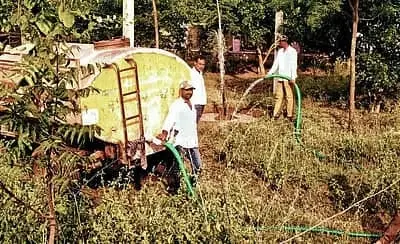
CH NEWS, BIDAR With deficient rainfall and intense sunlight threatening the survival of roadside saplings, Forest Department personnel are working hard to protect and nurture the young plants by supplying water through tankers. The department is watering thousands of saplings planted along various roads, including both sides of the Bhalki–Basavakalyan main road near Sola Dapaka village on the outskirts of Hulasur. Transporting water from distant locations and watering the plants is a laborious task. The challenge is evident from the fact that a single tanker can supply water to only around 25 saplings at a time. Despite these difficulties, forest personnel continue their efforts to prevent the plants from drying up and dying. However, environmental concerns extend beyond the shortage of water. Environmentalists have expressed concern over incidents in which roadside and field-boundary saplings are damaged by fires lit to burn waste, broken branches and other forms of destruction. There are also allegations that some farmers damage or remove saplings because of the misconception that trees, once grown, will cast shade over agricultural fields and affect crops. Such allegations need to be examined by the concerned authorities, and appropriate action should be taken wherever violations are established. Protecting saplings is as important as planting them. Saplings of neem, banyan, peepal, honge and other species can contribute significantly to environmental balance, soil conservation and biodiversity when they grow into mature trees. Setting fire to or cutting down these plants can undermine efforts to improve the green cover. The Forest Department must strengthen monitoring and create greater public awareness to prevent damage to roadside plantations. The hard work of forest personnel in watering the saplings will yield results only if the public also takes responsibility for their protection. Gram Panchayats, farmers, local organisations and residents should join hands with the department to ensure that the plants survive. Protective fencing should be installed wherever necessary, and care must be taken to prevent fires and other activities that could damage the saplings. The government, too, should provide adequate funds for plantation maintenance, water supply and protective measures. Regular inspections are needed to assess the condition of the saplings and ensure their survival until they grow into trees. The effort to increase green cover cannot end with planting saplings. Ensuring that every planted sapling survives and grows into a tree is the real test of environmental conservation.