B’luru garbage collection stalled over tenders
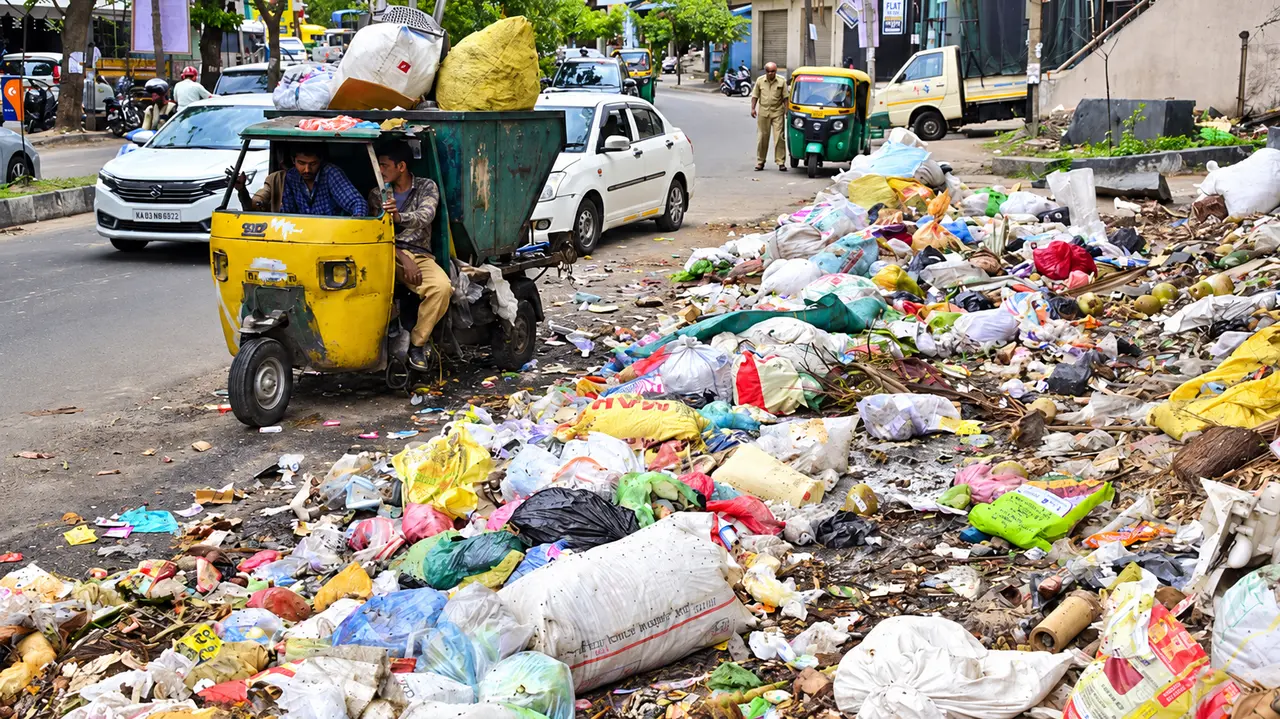
CH NEWS, BENGALURU Bengaluru’s ambitious plans to modernize its municipal sanitation framework have hit a severe roadblock following a tense standoff between civic authorities and garbage contractors. Out of 21 state-approved waste collection packages designed to overhaul the city's door-to-door system, contractors in only five constituencies have agreed to accept work orders, forcing the Bengaluru Solid Waste Management Limited (BSWML) to recall ten tenders and delaying implementation by up to six months. The revamp initiative, approved by the state cabinet nearly six months ago, aims to replace traditional auto-tippers with a modern, GPS-tracked digital collection network across 28 assembly constituencies. Under the proposed model, vehicle movements and route coverages are monitored digitally, tying daily vendor payouts strictly to verified service delivery. However, the rollout stalled after contractors demanded higher premiums. Although bidders initially agreed to a 14 percent premium upon which cabinet approvals were secured several firms subsequently backed out, demanding inflated rates or protesting strict digital monitoring protocols and the disqualification of partner firms during technical evaluations. Presently, work orders are moving forward solely in Govindarajanagar, Mahalakshmi Layout, Chickpet, Chamarajpet, and Vijayanagar, with Vijayanagar set to pilot the system within a month. Expressing frustration over the impasse, Bengaluru Development Minister Krishna Byre Gowda asserted that the government will not bow to contractor pressure and will immediately reissue fresh tenders to bring in willing operational agencies. Compounding the crisis, the Karnataka government has invoked the Essential Services Maintenance Act (ESMA) for a one-year period across Bengaluru's sanitation sector. The emergency notification strictly prohibits sanitation workers and allied staff from staging strikes, preempting threats of operational shutdowns over diesel cost reimbursements, statutory wage implementations, and delayed administrative bill payments. As municipal authorities scramble to procure fresh tenders, the deadlock threatens to severely impact public cleanliness and civic infrastructure across the capital.