India’s renewable energy capacity crosses 300 GW
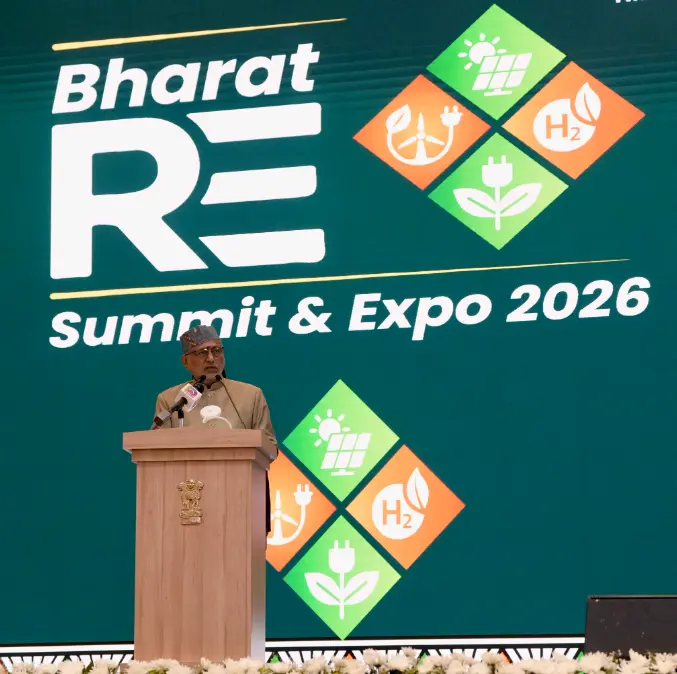
New Delhi Vice-President CP Radhakrishnan on Thursday said India's renewable energy achievements have emerged as a model for the Global South, highlighting the country's growing transition towards clean and sustainable power. Addressing the valedictory session of the Bharat Renewable Energy Summit and Expo 2026, he said India's non-fossil fuel-based installed capacity had crossed 300 gigawatts (GW). The country also achieved 50 per cent of its installed electricity capacity from non-fossil fuel sources in 2025, five years ahead of its target. Highlighting the expansion of solar energy, Radhakrishnan said India's solar power capacity had increased from less than 3 GW to over 170 GW in a decade. He noted that solar electricity, once considerably more expensive than coal-based power, had become one of the cheapest sources of electricity. He attributed this transformation to sound policies, private enterprise and collective efforts by states and citizens. The Vice-President said more than 65 lakh households had joined the solar movement through the PM Surya Ghar Muft Bijli Yojana. Additionally, nearly 30 lakh farmers had benefited from the PM-KUSUM scheme, with solar pumps helping reduce diesel expenses and generate additional income. He also highlighted initiatives aimed at extending electricity access to remote tribal communities, including PM-JANMAN and the Dharti Aaba Janjatiya Gram Utkarsh Abhiyan. Emphasising innovation, research and industry-academia collaboration, Radhakrishnan expressed confidence in India's hydrogen energy potential. He said the renewable energy transition could support economic growth, generate employment, reduce import dependence and strengthen energy security.