India and Italy deepen their scientific research ties
The two countries chalk out plans for a 2027 joint research initiative covering AI, clean energy, biotechnology and other emerging technology sectors.
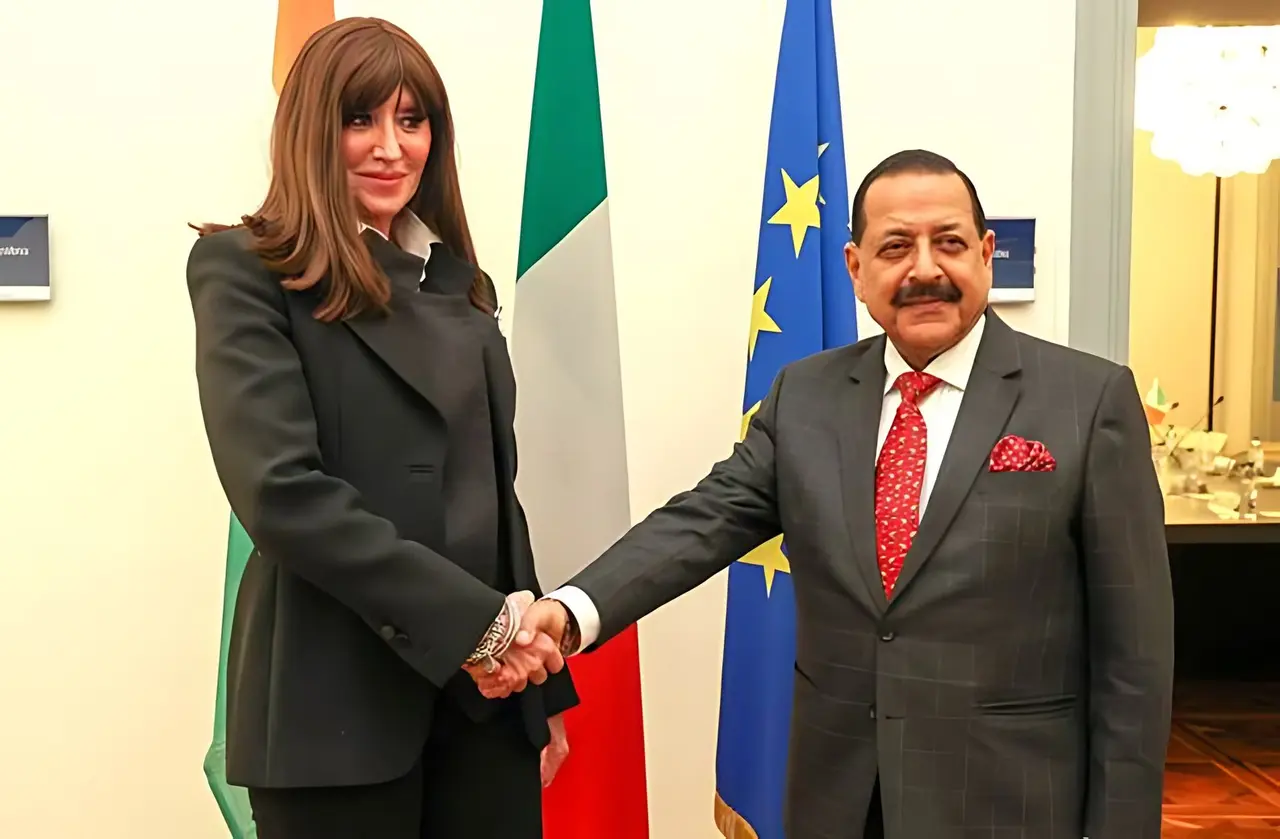
NEW DELHI: India and Italy have agreed to strengthen their longstanding scientific partnership and expand cooperation in research and innovation, following a bilateral meeting between Union Minister of State (Independent Charge) for Science and Technology Dr. Jitendra Singh and Italy’s Minister of University and Research, Anna Maria Bernini.
The discussions focused on translating the India-Italy Strategic Partnership into practical scientific collaboration, strengthening institutional mechanisms and identifying opportunities for joint research in emerging and priority technology sectors.
Both countries are also working towards launching a new joint research call in 2027 under their existing Memorandum of Understanding (MoU). The proposed collaboration will cover several key areas, including artificial intelligence, high-performance computing, big data, clean technologies, hydrogen, renewable energy and the global energy transition.
Advanced biotechnology and biomedical research will also receive attention, especially in gene therapy, mRNA technologies and biomanufacturing.
Dr. Singh expressed hope that both countries would continue working closely to promote practical cooperation by leveraging their respective science, technology and innovation ecosystems. He also assured full cooperation from the Indian side.
The scientific partnership between the two countries dates back to 1978, when their first Inter-governmental Agreement on Science and Technology was signed. The agreement was subsequently renewed on November 28, 2003.
India and Italy elevated their bilateral relationship to a Strategic Partnership in 2023. In November 2024, Prime Minister Narendra Modi and Italian Prime Minister Giorgia Meloni announced the Joint Strategic Action Plan for 2025‑2029.
Under the Indo-Italian Executive Programme of Cooperation, more than 150 joint projects have already been implemented. The current programme for 2025‑27 supports researcher mobility and significant research proposals, further strengthening bilateral scientific engagement.