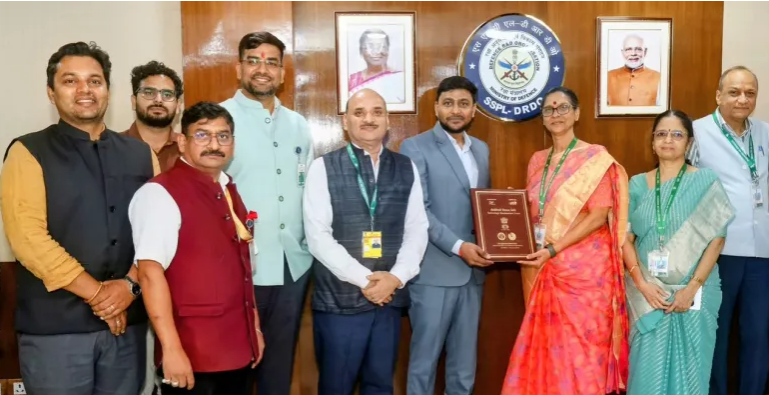
New Delhi The Defence Research and Development Organisation has signed an agreement with Rajasthan-based startup Zero mK India to develop a specialised cooling system for quantum technology. The project aims to build a 20 millikelvin dilution refrigerator in India, reducing reliance on imported equipment. Signed in New Delhi under DRDO’s Technology Development Fund, the agreement is the first high-value deep technology project supported by a ₹500-crore funding pool approved by Defence Minister Rajnath Singh. The Director of the fund and representatives of the Alwar-based company signed the pact. A dilution refrigerator can cool equipment to temperatures extremely close to absolute zero. Twenty millikelvin is 0.02 kelvin, far colder than conventional industrial refrigeration. Such conditions are needed to operate and test several types of quantum computing hardware, whose delicate quantum states can be disrupted by heat. The project is intended to strengthen India’s ability to design and build the infrastructure required for quantum research. Officials said it aligns with the National Quantum Mission and could support work in advanced cryogenics and other strategic technologies. Producing the system domestically would also give researchers and developers greater access to an important piece of equipment. The agreement connects a defence research agency with a private startup in an area that has potential applications beyond a single laboratory. It reflects an effort to involve Indian industry in developing complex technologies that have often depended on overseas suppliers. Rajnath Singh congratulated DRDO and its industry partners, expressing hope that the collaboration would provide a model for future work in emerging fields. DRDO chairman and Defence Secretary Rajesh Kumar Singh also conveyed his support to the teams involved. The pact begins a development project. Its success will depend on whether the partners can build and test a reliable system at the target temperature, potentially strengthening India’s quantum research infrastructure.
DRDO backs indigenous quantum cooling system
The fund's Director and Alwar-based company representatives signed the agreement.