Farmers use tanker water to save crops
DHARWAD: With both monsoon and post-monsoon rains failing, farmers in Dharwad district are struggling to protect their standing crops from drought.
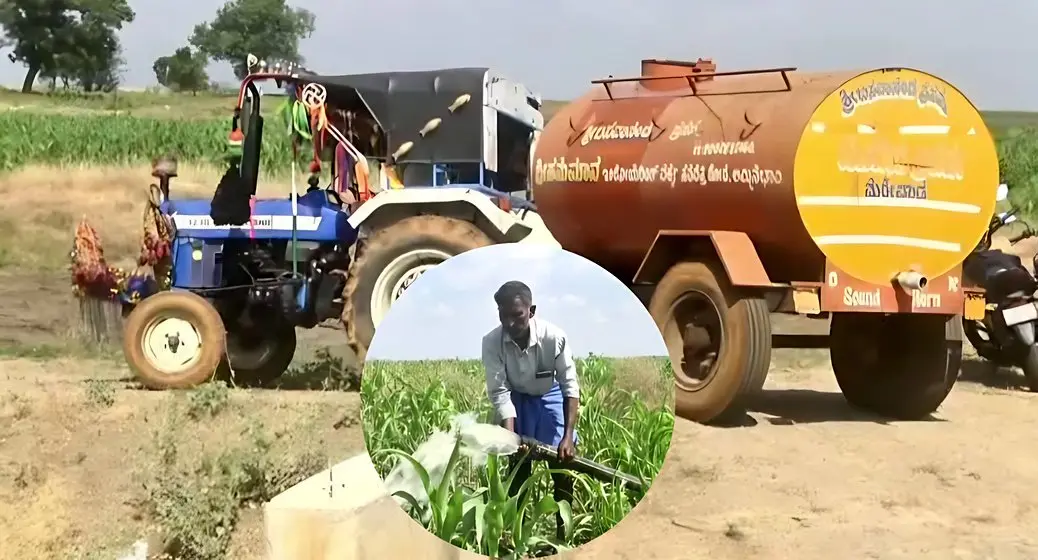
In Harobelavadi village of Dharwad taluk, farmers have resorted to purchasing tanker water to irrigate their fields and save whatever crops remain.
The failure of rains has caused serious concern among the farming community in the semi-Malenadu region of the district. With little hope of further rainfall, farmers are making desperate efforts to protect their crops, particularly sorghum (jowar), which can provide fodder for their livestock even if the grain yield is poor.
In Harobelavadi, several farmers are bringing water through tankers and distributing it across their agricultural fields using pipes. Pipes have been laid between rows of crops to ensure that the limited water reaches the plants. The unusual sight of tanker water being used for irrigation reflects the seriousness of the drought situation.
Farmer Veeresh Kanaji had cultivated wheat on 1.5 acres and sorghum on another 1.5 acres of his three-acre land. He began sowing after the initial post-monsoon showers raised hopes of a good crop. However, there has been no rainfall since then, leaving the crops increasingly dry and withering.
Although he fears that the wheat crop may not survive, Kanaji is determined to save his sorghum crop. He has started arranging tanker water to irrigate the field, hoping to obtain at least some fodder for his cattle. He said the final yield remained uncertain, but saving the crop for livestock was now his priority.
Farmers said each tanker of water costs between ₹500 and ₹1,000, depending on the supply. Repeated purchases are adding to their financial burden at a time when agricultural income is already uncertain. With rainfall failing and irrigation expenses mounting, farmers are facing a difficult situation as they struggle to protect both their crops and livestock.